
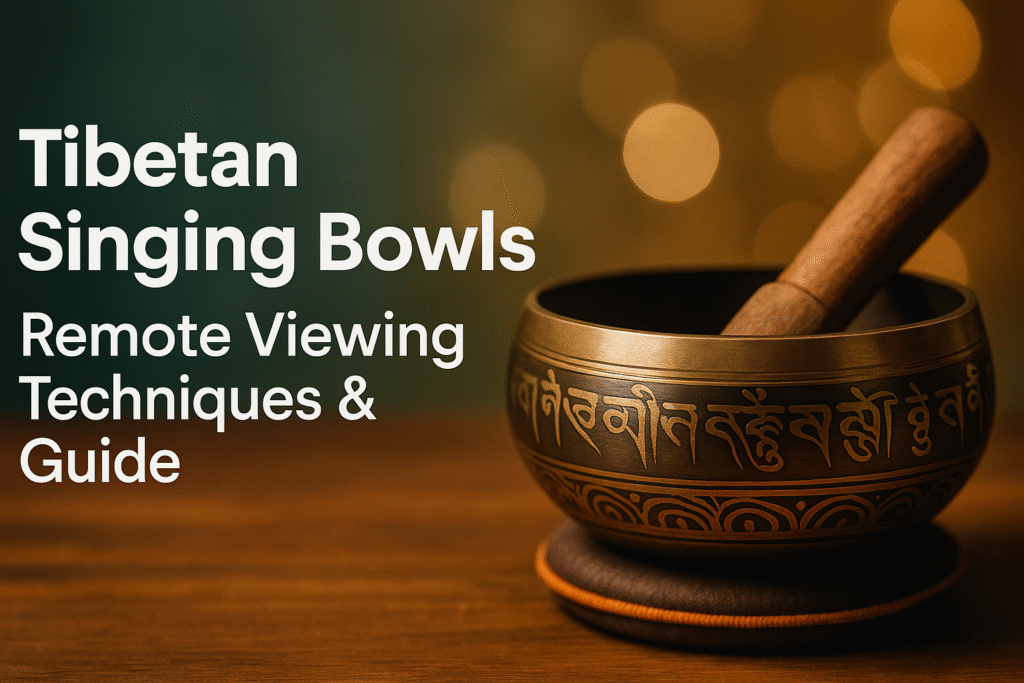
Key Takeaways
- Tibetan Singing Bowls create sound vibrations that shift brainwaves to theta frequency, creating ideal mental states for remote viewing practices.
- Traditional singing bowls contained seven specific metals linked to celestial bodies, producing unique harmonics that modern instruments cannot duplicate.
- Using proper bowl techniques combined with structured remote viewing methods creates powerful ways to access broader states of consciousness.
- Regular singing bowl practice helps address common remote viewing obstacles like mental barriers and differentiating imagination from genuine perception.
- Day Motivation offers resources to help integrate these ancient sound healing methods into your modern spiritual practice.
Unlock Your Mind: How Singing Bowls Enhance Remote Viewing
The ancient sound of a Tibetan singing bowl can move consciousness beyond normal awareness. These instruments form connections between physical reality and expanded awareness states, making them valuable tools for remote viewing. When first hearing the rich, complex tones of a singing bowl, most people simply enjoy the pleasant sound – yet much more occurs beneath the surface.
The singing bowl’s vibrations shift brainwaves to theta frequency (4-7 Hz), matching the state achieved during deep meditation. This creates an ideal brain environment for remote viewing – the practice of gathering information about distant targets through expanded awareness. Day Motivation has found that combining ancient sound technology with focused intention produces remarkable results for developing intuitive abilities.
The Ancient Origins of Tibetan Singing Bowls
Traditional Composition and Seven Metals
The singing bowls’ extraordinary power starts with their composition. Traditional Tibetan singing bowls weren’t simply cast from random metal – they were carefully crafted using seven specific metals, each linked to celestial bodies: gold (Sun), silver (Moon), mercury (Mercury), copper (Venus), iron (Mars), tin (Jupiter), and lead (Saturn). This alchemical combination creates harmonics that modern instruments simply cannot duplicate.
The process of creating these bowls was once a closely guarded secret, passed through generations of metal smiths. The exact proportion of each metal and the method of combining them produced instruments with unique acoustic properties that facilitate shifts in consciousness.
Shamanistic Roots and Spiritual Applications
Long before singing bowls became popular meditation tools in the West, they served important roles in shamanistic traditions throughout the Himalayas. Shamans used these instruments to alter their consciousness, allowing them to move between worlds, communicate with spirits, and access hidden information.
The bowls weren’t merely musical instruments but served as technological devices for consciousness study. Shamans understood that certain sound frequencies could dissolve the boundaries between ordinary and non-ordinary reality, creating pathways for expanded perception – the foundation of remote viewing.
Hidden History in the Himalayas
The true origins of singing bowls remain somewhat mysterious. While commonly associated with Tibet, these instruments were likely used throughout the Himalayan region, including Nepal, Bhutan, and northern India. Interestingly, there’s limited documentation of their use in official Buddhist texts, suggesting they may have been part of more esoteric or folk practices.
Some historians believe the bowls were deliberately kept secret to protect their power from misuse. Others suggest they were so integrated into daily spiritual practice that they didn’t require special mention. What’s clear is that their ability to induce altered states of consciousness made them valuable tools for those seeking to perceive beyond ordinary reality.
The Science Behind Sound and Consciousness
Brainwave Entrainment and Theta States
The effect of singing bowls isn’t merely spiritual – it’s firmly rooted in neuroscience. When a singing bowl is played, it produces sound waves that lead the brain to match its frequency. This phenomenon, called brainwave entrainment, works particularly well with singing bowls because they naturally produce frequencies that match theta brainwaves (4-7 Hz).
Theta brainwaves connect with deep meditation, improved intuition, and openness to information beyond ordinary perception – exactly the state needed for effective remote viewing. During this theta state, the conscious, analytical mind relaxes, allowing access to deeper awareness levels. EEG studies confirm that people exposed to singing bowl frequencies consistently show increased theta wave activity, the same pattern seen in experienced meditators.
Harmonics Beyond Western Music
Unlike Western musical instruments that produce limited harmonics within a controlled octave system, Tibetan singing bowls generate rich, complex overtones that go far beyond what we typically hear. While a piano note might produce 5-7 harmonics, a single singing bowl can generate dozens of overlapping tones, many outside standard Western musical scales.
These complex harmonics interact with our neurological system in profound ways. The brain becomes surrounded by a three-dimensional sound bath that can’t be processed through ordinary listening. Instead, these sounds bypass conventional hearing pathways and directly affect brainwave patterns. This is why many first-time listeners report feeling the sound “inside” rather than just hearing it externally.
Essential Techniques for Playing Singing Bowls
1. Basic Gong Beat Technique
The gong beat forms the foundation of singing bowl practice and makes an excellent starting point for remote viewing preparation. Hold the singing bowl in a flat palm, allowing it to rest naturally without gripping. Using a suede-covered mallet, gently strike the mid-external wall of the bowl with a deliberate, controlled motion.
The key is to strike with enough force to produce a clear tone, but not so hard that the sound becomes harsh or distorted. Allow the bowl to ring fully after each strike, noting how the sound grows, builds, and eventually fades. For remote viewing preparation, establish a rhythm of one strike every 30-60 seconds, allowing the full sound cycle to complete before striking again.
2. Rimming Technique
The rimming technique produces the characteristic “singing” sound that gives these instruments their name. Hold the bowl as with the gong technique, but instead of striking, press the mallet firmly against the outside rim of the bowl. Then, with even pressure, move the mallet around the rim in a circular motion, maintaining consistent speed and pressure.
At first, a slight friction sound will be audible, but as the circular motion continues, the bowl will begin to ring and sing with a sustained tone. The rimming technique creates the strongest brainwave entrainment effect and works particularly well for deepening the remote viewing state once initial relaxation has been established with the gong beat technique.
3. Chanting While Playing
Combining vocal tones with the singing bowl creates a powerful combined effect that can significantly improve remote viewing abilities. After establishing a strong sound with either the gong or rimming technique, begin producing a steady tone vocally. Try different vowel sounds (particularly “om”, “ah”, or “uu”) until finding one that seems to blend with the bowl’s frequency.
The goal is to match the vocal tone to the bowl’s fundamental note or one of its harmonics. When this matching occurs, a distinctive vibration can be felt throughout the chest and head. This combined acoustic effect strengthens the theta brainwave state and creates a more complete consciousness shift ideal for remote viewing work.
Step-by-Step Remote Viewing Protocol
1. Creating Sacred Space
Begin by preparing a quiet, comfortable environment without distractions. The space doesn’t need to be large, but it should feel secure and peaceful. Many practitioners find that dimming lights and using candles help signal to the mind that this is a special time, different from ordinary activities.
Position yourself comfortably, either seated on a cushion on the floor or in a supportive chair. Place the singing bowl within easy reach, along with any other items needed for the session. Taking a few moments to intentionally prepare the space creates a psychological foundation that supports the deep focus required for remote viewing.
2. Bowl Selection and Placement
If multiple singing bowls are available, take time to determine which one connects most strongly with your current energy and intention. There’s no single “best” bowl for remote viewing – the ideal instrument varies based on personal connection and the specific viewing task.
Smaller bowls (5-7 inches in diameter) typically produce higher frequencies that promote alertness and clarity, while larger bowls (8-12 inches) generate deeper tones that create profound trance states. For beginners, a medium-sized bowl of 7-9 inches often provides the optimal balance. Place the bowl on a cushioned surface or hold it in the non-dominant hand, positioning it for comfortable playing throughout the session.
3. Inducing the Meditative State
Begin with several minutes of focused breathing to center awareness. Then introduce the singing bowl using the gong beat technique, striking it gently every 30-60 seconds. After 5-7 minutes, switch to the rimming technique to deepen the meditative state.
Allow the sound vibrations to flow through the body, noting how they affect different areas. Many practitioners report sensations of warmth, tingling, or pulsation as the bowl’s vibrations align with their physical and energetic systems. This alignment indicates you’re approaching the optimal state for remote viewing.
4. Setting Clear Intentions
Once a deep meditative state is achieved, it’s time to set the intention for the remote viewing session. This step matters greatly – without clear intention, awareness may wander instead of focusing on a specific target. The intention should be spoken either aloud or mentally, using simple, direct language.
For beginners, it’s helpful to start with physical locations rather than abstract concepts. For example: “I intend to perceive the current conditions at the Grand Canyon,” or “I intend to view the interior of the Taj Mahal.” More advanced practitioners might target specific information: “I intend to perceive the solution to [specific problem],” or “I intend to view the location of [specific object].”
After stating the intention, visualize it as a beam of light or energy extending from your awareness toward the target. Then release attachment to the outcome and allow information to flow naturally.
5. Engaging in Remote Viewing
While maintaining the meditative state with the singing bowl’s vibrations, begin to notice the impressions that arise in consciousness. These may appear as visual images, physical sensations, emotions, smells, tastes, or simply knowing. The key is to remain open without forcing the experience.
Remote viewing impressions often start subtly – perhaps a fleeting color, a temperature sensation, or a geometric shape. Allow these initial impressions to develop naturally, neither dismissing them nor adding to them with imagination. Continue playing the singing bowl using either the gong or rimming technique to maintain the theta brainwave state that helps clear reception.
If the mind begins to analyze or question the impressions, gently bring focus back to the sound of the bowl. Analysis happens after the session, not during it. During viewing, the task is simply to perceive and note what comes through, without judgment or interpretation.
6. Recording Your Impressions
Keep a notebook or recording device nearby to document impressions during or immediately after the viewing session. Some practitioners prefer to record impressions as they occur, while others wait until the end of the session to maintain the flow of perception.
Be as detailed as possible in your notes. Include everything perceived, even if it seems unimportant or doesn’t make immediate sense. Often, details that initially seem irrelevant prove to be important verification points later. Sketch any visual impressions, no matter how abstract or incomplete they may seem.
Date and time-stamp your records, and note the specific intention of the session. This documentation creates a valuable record of progress and helps identify patterns in remote viewing abilities over time.
7. Closing the Session
Proper closure is essential after remote viewing work. Begin by gradually stopping the singing bowl, allowing the final tones to fade naturally. Take several deep breaths and gently wiggle your fingers and toes to reconnect with physical awareness.
Next, visualize your energy field returning to your physical body, creating a clear energetic boundary. Some practitioners find it helpful to state aloud: “I am now complete with this remote viewing session and fully present in my physical body.”
Finally, perform a physical action that signals completion – such as clapping your hands, stomping your feet, or splashing water on your face. This helps create a clear psychological boundary between the remote viewing state and normal waking consciousness.
Overcoming Common Challenges
Breaking Through Mental Resistance
The analytical mind often resists remote viewing by creating doubt, distraction, or excessive analysis. This is normal and happens to both beginners and experienced practitioners. The singing bowl provides a powerful tool for addressing this resistance by continuously bringing the mind back to present-moment awareness through sound.
When you notice your mind creating resistance, questioning the process, generating self-doubt, or becoming distracted, simply return your attention to the sound of the bowl. Don’t fight against mental chatter; instead, let the sound gently dissolve it. With regular practice, the analytical mind learns to step aside more easily, allowing deeper perception to emerge.
Distinguishing Imagination from True Perception
One of the most common challenges in remote viewing is differentiating between actual perception and imagination. While both use the same mental faculties, they have distinct qualities that become more recognizable with practice.
True remote viewing perceptions often have these characteristics:
- They arrive suddenly and unexpectedly
- They may contradict what you expected to perceive
- They have a distinctive clarity or “realness”
- They often include surprising details you wouldn’t have imagined
In contrast, imagination tends to follow logical thought patterns, align with expectations, feel “created” rather than “received,” and lack surprising or contradictory elements.
The singing bowl helps with this discernment by keeping you grounded in a receptive theta state rather than an active creative state. When in doubt, return your attention to the sound and ask for clearer perception.
Interpreting Symbolic Information
Remote viewing information often arrives in symbolic or metaphorical form rather than literal images. Learning to interpret these symbols is an important skill that develops over time. The key is to notice your immediate, intuitive response to the symbols rather than intellectually analyzing them.
For example, if you perceive water during a session targeting a desert location, it might represent an underground water source, a mirage, the emotional quality of the location, or a metaphor for something “flowing” at the target.
Keep a personal symbol dictionary in your remote viewing journal, noting how certain symbols connect with verified target information. Over time, you’ll develop a better understanding of your personal symbolic language.
Harness Your Innate Psychic Abilities Today
The combination of Tibetan singing bowls and remote viewing offers a powerful method for expanding awareness beyond ordinary perception. These ancient sound tools create the ideal brainwave state for accessing information beyond the limits of physical senses, while providing a stable anchor for consciousness during explorations of expanded awareness.
With regular practice, patience, and the step-by-step protocol outlined in this guide, reliable remote viewing abilities can be developed that enhance both spiritual practice and practical life. Like any skill, remote viewing improves with consistent practice and an open, curious attitude.
Day Motivation provides comprehensive resources for deepening your practice of sound healing and intuitive development through ancient wisdom traditions.




Leave a Reply